





*******
*******
.info
Significant Milestone in American History(bottom of page) |
Links to articles with their own pages
Alternate Hexadecimal codes
Metric Time
When did the new century/millenium begin?
LA Pacific Electric Subway
NY-Springfield by local bus
Major geographical error on common gag in many cartoons
Definitions of "Fortune/Luck" and "Money"
Division between man's soul and spirit: the 12 primary emotions
Christian Issues links
Illustrations
•PacCube
•Link to Flowers and LT/MM essays
•Tad Ghostal goes Postal!
•Willy B map (combination bus and Subways in "the Map" style)
•COMPO Bus
•7 segment display
Fan Interest Web sites
Other interesting things from the Web
•Two factor political theory
•Air Powered Car
•Quadricycles/ATV's/Paddle boats/Jet Skis
•Best CGI animation: TOPIX Computer Graphics
•HunterDouglas "Silhouette" hybrid blind/shades; combo washer/dryers
•Link to Essays page for Battle of the Ghostbusters
•KICK Design subway map
•NY Splash Tours
Alphabetic Integers
I always imagined extending the alphabet by doubling the digits like numbers. I later found that this is done, in court exhibits, and spread sheet programs. Here are additional and mathematical tables showing how it would work
33rd Street Passage
A forgotten passage connecting the 6th and 7th Avenue subway mezzanines (including PATH) that was useful, but prone to crime and the homeless. With the revitalization of the area, it should be given another chance and opened. Formerly owned by Gimbel's, it is now owned by Vornado Realty, owners of both the Manhattan Mall and Hotel Pennsylvania, comprising the whole block, of which the passageway is the property's sidewalk vault. Includes pictures, both mine and others, and how to find where it is sealed up.
Temperament For Dummies
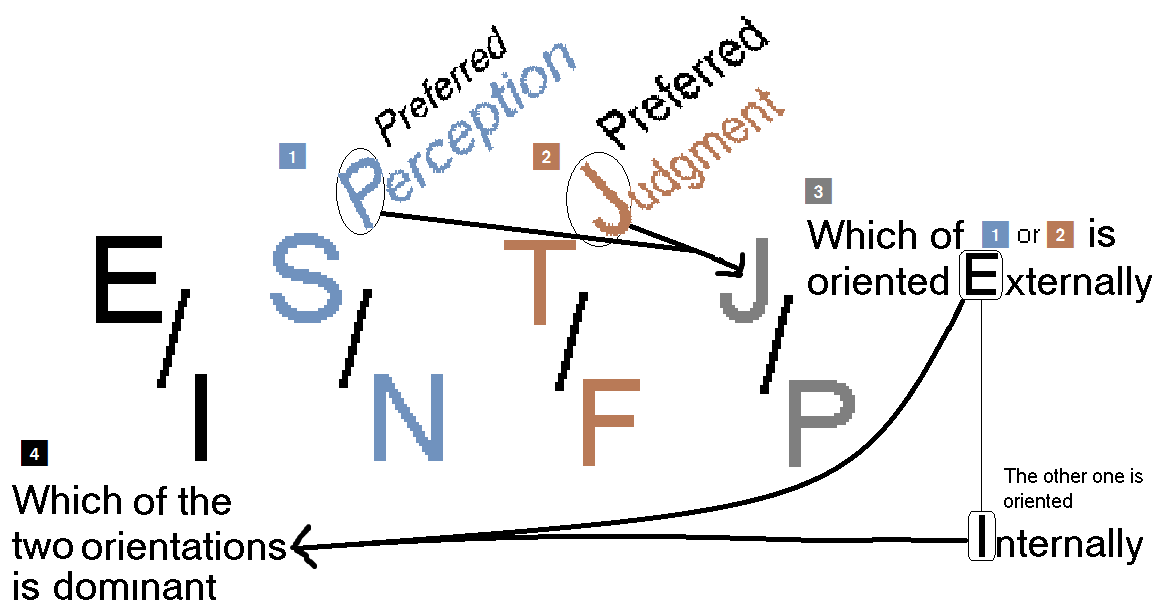
Discusses the basis of temperament theory, and how it helps us understand ourselves and others. Promotes a theory of a fifth temperament, and how the factors of temperament theory (Introversion vs extroversion, along with people vs. task orientation), work. There are also three "areas of need" through which people's temperaments can be blended. All of this was derived from the once popular FIRO instrument. This is a three part series, and part two compares this system with other instruments like MBTI.
World Trade Center memoirs
My memories of WTC (where I had my very first paid job) and thoughts about 9-11 and the ideological debates thet followed.
East River Crossings Manhattan Bridge Alternatives
This is basically outdated, but it is interesting to see some of the BMT-IND subway patterns they came up with, in the event of the Manhattan Bridge being fully opened (O), partially open (N north tracks/S South tracks), or closed (C), and a proposed alternate connection between DeKalb Avenue and the F line tunnel built or not. Of course, the bridge is now finally fully open after years of switching back and forth between one side or the other. But before this, especially in the transitional 90's, when seemingly neverending work was continuing, and even possible threats of permanent total shutdowns floated around, transit fans always wondered what service would be like if it was fully closed, or the work was finished and it was fully open, or the new connection built. So this was valuable information.
The new connection was not built (And now the area it would have been dug up in is being built up). There was an option on there called "No Build" or "Transportation Services Management" (TSM) meaning using the existing infrastructure and improving serivce. This technically is what is being done, though the current pattern is still nothing like the TSM-O in the list. These patterns reflect the pre-2001 routings (B on West End line, D on Brighton, Q on 6th Avenue), which changed when the Bridge swapped back from the N to the S configuration in 2001, and by the time the work was finished and it fully opened, rider input and other operational issues went with totally different service patterns, so it's all moot now. It is still helpful in giving an idea of what it would be like if the bridge was completely closed, and the tables include the throughput (trains per hour).
BTW, the public hearing where this info was given out took place in the WTC, and was the last time I was up in one of the towers (a good four or so years before 9-11).
Alternate Hex Codes
I never liked how the standard hexadecimal codes use A-F to represent 10-15. Because of the concept of alphabetic integers (link above), those to me represent 1-6. So I would have picked up the alphabet with the tenth letter. This would make it easier to figure out the decimal value, since I would think "10-15" when reading the letters:
A=J; B=K; C=L; D=M; E=N
Problem is, the next and 15th letter is "O" which looks like a "0" (zero) already used as an integer, of course. So I looked into other schemes. You can skip it and go to "P", substitute another letter like "X". or perhaps keep it as "F" (which in RGB color codes I tend to read as "full' as in "fully on" as representing 255 and the highest value. However, F0 and especially 0F fo not represent that). But I would like to keep the letters in sequence (like is for some reason the base would someday be increased, for instance).
I also looked into using other characters. Many of the ones on the keyboard already have other uses in computer code, so they wouldn't be good. Many others aren't on the keyboard, but then they would be complicated to type. (Alt codes). I thought of the Euro (€), which is being added to many keyboards, but it's too much like a "E". If it looked more like an "F", I would compromise. One idea is a ready-made "15" in a bullet or circle as a single character ⑮: U+246E; ⒂: U+2482. But then for that, we might as well use them for 10-14 as well. That might be a better idea, except that those characters are compact and do not look as different as different letters. I would think the best idea would be a simple 7/8 block (can't use full block because they would attach to one another creating a bar): ▉ (U+2589). So then, the smallest value would be "0", and the highest would be "▉" evoking binary! (0 and 1).
Some HTML codes from this page would look like: body bgcolor="#600020" text="#▉▉▉▉▉▉" link="#0080▉▉" vlink="#8020L0" (default vlink on other pages="#551j8k") alink="#▉▉0000" orange: FONT COLOR="#▉▉J000 light gray: "#JJJJJJ" light blue:
"#80L0L0" background color of my christian Index: "#n0m0m0"
Metric Time:
This I had always thought if all of the other units of measurement were supposed to be converted to metric (based on divisions of 10), then why was time omitted? If we got rid of the "inch" for space measurment, and had a "centimeter" instead; and other units like grams, liters, and Celsius (centigrade) degrees, then why stick around with the old "second"? In fact, in astronomical calculations, where hours, days, weeks, etc. are irrelevant, they have made a metric system based on the second (milliseconds, microseconds, etc). They didn't make "kiloinches", "decifeet", "megapounds", or "centigallons", but rather created whole new units, based on logical points of measurement, like the freezing or boiling point of water being 0 or 100 degrees Celsius. The same units were then projected back to absolute zero, and when begun on that scale, called Kelvins.
A type of metric time I first saw when working the Census was using ".5" instead of ":30" and ".25" instead of ":15", etc. Nice idea, but I wish it was taken further. So I figured, why not take the most obvious and necessary unit of time on earth, the day, and divide it down into new units. (Units larger than a day wouldn't work well, because of the seasons and year). I started by dividing the day by 10, and continuing to divide each unit by 10, until I got to a unit of time most comparable to the second. here, in minutes:seconds--
1/10=144:00
1/100=14:24
1/1000=1:26.4
1/10000=00:08 (8.64)
1/100,000=00:0.864
So the new metric second would be 1/100,000th of a day, and slightly smaller than a second. Sort of like the temporal counterpart to the centimeter. Since below "centi" (10-2), only powers divisible by 3 were given Greek prefixes (-3, "milli"; -6, "micro", etc), there was no way to name this new unit with a standard SI prefix like the others. I suggested a hybrid prefix, centimilli, meaning of course, one hundredth of a thousandth. So it would be "centimilliday". Hour-like units would be 1/20= 00:72:00, ("semideciday"), at 72 minutes. Or 1/25= 00:57:36, which is about 2½ minutes short of an hour.
Here is the conversion between our time (military and 12 hour) and the new time.
| 0000 (12:00A) 00:000 00:14:24 1000 12:15 ≈ 01:041 00:28:48 2000 12:30 ≈ 02:083 00:43:12 3000 12:4503:125 (1/32) 00:57:36 4000 (1/25) 12:59:24 04:125 1:00 ≈ 04:166 1:12:00 5000 (1/20) 1:26:24 6000 1:30 06:250 (1/16) 1:40:48 7000 1:55:12 8000 (2/25) | 2:00 ≈ 08:333 2:00:36 08:375 2:09:36 9000 2:15 09:375 2:24:00 10000 2:52:48 12000 (3/25) 3:00 12:500 3:36:00 15000 3:45 15:625 3:50:24 16000 (4/25) 3:59:2416:625 4:00 ≈ 16:666 4:48:00 20000(5/25) 5:00 ≈ 20:833 5:45:36 24000(6/25) | 6:00 25:000 6:43:12 28000 (7/25) 7:00 ≈ 29:166 7:12 30000 7:40:48 32000 (8/25) 8:00 ≈ 33:333 8:24 35000 8:38:24 36000 (9/25) 9:00 37:500 9:36 40000 (10/25) 10:00 ≈ 41:666 10:33:12 44000 (11/25) 10:48 45000 11:00 ≈ 45:833 11:31:12 48000 (12/25) | 12:00 50:000 12:28:48 52000 (13/25) 1300 (1:00P)≈ 54:166 1312 55000 1:36:24 56000 (14/25) 1400 (2:00P)≈ 58:333 1424 60000 (15/25) 1500 (3:00P)62:500 15:21:36 64000 (16/25) 1536 65000 1600 (4:00P)≈66:666 16:19:12 68000 (17/25) 1648 70000 1700 (5:00P)≈70:833 17:16:48 72000(18/25) | 1800 (6:00P) 75:000 18:14:24 76000 (19/25) 1900 (7:00P)≈79:166 1912 80000 (20/25) 2000 (8:00P)≈83:333 20:09:36 84000 (21/25) 2024 85000 2100 (9:00P) 87:500 21:06:24 88000 (22/25) 2136 90000 2200 (10:00P)≈ 91:666 22:04:48 92000 (23/25) 2248 95000 2300 (11:00)≈ 95:833 23:02:24 96000 (24/25) |
Come to find out, that I am not the first one to think of this at all! This system was actually planned back in France around the same time as the rest of the metric units (1700's) and even implemented before the others, but then decided against. I guess because of the almost universal worldwide use of the standard 12-based system. The system is now called "Decimal Time", and I even found a website and forum on this, (http://www.decimaltime.hynes.net) where I shared my ideas. One of the discussions was a name for the new metric second. Suggestions have been "tick" and "beat" (the heartbeat is said to be the same length as this 100,000th of a day!) I even hear of, and went to see a watch by Swatch using this system, in its Times Square store! Also, astronomers, beginning with John Herschel (Outlines of Astronomy) in 1849, use another version of this called fractional days to represent time in their writings. (http://decimaltime.hynes.net/fraction.html).
Also, the decimal time they use is apart of what they call "Universal Time" (UT), and begins at 8PM at a particular time zone, rather then midnight in every time zone.
When did the new century/millenium begin?
Now several years too late is an explantion I thought of, of the question of when the millenium and new century began.
The distinction is one of cardinal vs ordinal. Cardinally, 2000 began the set of "2000's" (with the counting numbers of zero, one, two, etc); and hence was the first year of the new millenium. But ordinally (which begins with "first", not zero, and then continues "second", "third", etc), it closed out the 20th century) which encompassed most of the 1900's series years). The problem is that years themselves are cardinal, but centuries are ordinal. So the "hundreds" series do not lne up with the century numbers, except for the one year which is the multiple of 100, which starts the cardinal series, and ends the ordinal century.
Incorporate old Pacific Electric Subway into expanding LA rail network.
As slow as NYC is for building new rail projects; LA, which had eliminated all its rail in favor of roads, is really moving forward with both "heavy" and "light" rail projects. With all the new subways and streetcars being built, I noticed none had bothered to utilize the old subway LA once had, as I had thought at least one of these new lines would use: the Pacific Electric tolley tunnel through downtown. That way all the subways you ride in LA wouldn't just be the new one, but rather an old one as well. You don't normally think of LA in terms of old subways, and I had never heard of it for a long time.
The big barrier is that it was severed right in the middle, to build the foundation for a couple of buildings including the Bonaventure hotel. That was that interesting four-round tower building you would see on TV sometimes. That was the very first thing I went to see when I first arrived in LA in the Air Force (stationed at a base in the distant desert parts of San Bernardino county, not too far from Edwards AFB, where we did some military exercises once). I passed between those funny sharp angle shaped office towers you aften see (the Wells Fargo Plaza), on the way. I looked into it for my honeymoon four years later, but the Bonaventure was not part of the travel agency's package, so we ended up not too far away on 7th St.
So I would say, if possible, build around the building foundations. Or turn the tunnel into a tourist shuttle for people staying in the hotel! That would be cool. It would go right from the hotel basement to closer into downtown, where it once had a nice terminal in the basement of a building that still stands, and was rebuilt as condos. I guess it could go the other way, as well. You can find out more information on it here:http://www.westworld.com/~elson/larail/PE/tunnel.html. This site: http://www.erha.org/pewst.htm (Electric Railway Historical Association of Southern California) does not even mention the Bonaventure foundation being built in the space, but instead says that it was simply it was filled in, due, to a claim by the city that it was "unsafe" due to "incompatibility" with the Bunker Hill redevelopment project because "the tunnel lacked reinforcing steel, hence nothing could be built above it". (While, "As a matter of fact, the Harbor Freeway, a defence system highway, was constructed directly over the tunnel in 1947, after U.S. Army and state engineers had determined that the subway was so strong that no bridge structures or caissons would be required". This would seem to suggest that the construction was actually above the tunnel, and there should be no impediment to removing the fill-in. (Perhaps reinforce it to satisfy the city's concerns).
NEW YORK to SPRINGFIELD, MA by LOCAL bus!!
Traveling between New York and Springfield to see my [paternal] grandmother, I always noticed how different New England cities looked. What always stood out were the dark wooden "back porches" on the backs of nearly every pre-war apartment building, frame house and townhouse (including my grandmother's) which served both as balcony and fire escape (back stairs). I felt so away from home with our flimsy looking thin fire escapes you had to climb out the window to get to, and you wern't supposed to be out there anyway. I always wanted to see the gradual change from New York to New England, when passing by the cities in between on the Greyhound, Trailways or Peter Pan on the interstates. Since the cities in Westchester, and southern Connecticut were all close together; I wondered if their bus systems connected. I eventually find that they do, with the not too long ago added "Coastal Link" between Norwalk and Milford completing the way to New Haven. And then, with easy access to the Connecticut Transit website; I find that connection all the way to Springfield is in fact possible. But there was a very narrow "window" it had to be done in. Starting out early from NYC, by the time you get into central Connecticut, it will be late afternnon, and buses in towns will stop running soon, including the final Hartford to Springfield connection, which are commuter runs. So I set out in April, 2003, attempting to go all the way from home via the Q58 to Flushing, to the QBx1 to Pelham Bay Park for the W45 to New Rochelle, to the W61 to Port Chester for the Connecticut leg of the trip. But I just miss the 45, and they are two hours apart. So by now a Transit worker, I hang out at the Pelham crew room (totally foreign to me, as I had never worked the IRT yet), and then continue. I then have a long wait in New Rochelle. This really set me back, and by the time I get to New Haven, it is 6PM, dark, and I knew I had to turn back (by Metro North). So I set out again on Oct. 28 of that year, took the train and picked the W61 up directly at Fordham, and this time made it!
| W61 | Fordham Port Chester | 6:30 7:58 | Flx. Metro #814 | $2.00 |
| CT 11 | Port Chester Stamford | 8:02 (late 7:45) | Flyer DLF40 # | T |
| 42 | Stamford Norwalk | 9:01 9:47 | MCI Classic #9633 (first ride In Series 50 powered Classic) | T |
| Coastal Link | Norwalk Milford | 9:50 11:43 | RTS #130 (Norwalk "Wheel" Bus) | $1.25 |
| O5 | Milford New Haven | 11:40 | MCI Classic #9179 | T |
| C1 | New Haven Meriden (Kohl’s Plaza) | 12:30 1:35 | MCI Classic #9096 | $1.00 |
| A | Kohl’s Plaza Downtown | RTS #A107 | T | |
| B | Downtown Westfield Shoppingtown (formerly Meriden Plaza) | 2:00 2:15 | RTS | $1.00 |
| AR | Westfield New Britain | 3:00 | RTS #B141 | T |
| P | New Britain Hartford | 3:25 4:08 | RTS #C155 | T |
| CT 5 | Hartford Enfield | 4:15 | MCI 102DL(?) #305 | $2.35 |
| PVTA 16 | Enfield Springfield (Bball Hall of Fame) | 4:45 5:00 | RTS #1120 (35 ft) | $1.00 |
TOTALS: 10:30 (from Fordham); 12:00 (from home; left at 5AM); $8.60
I left like I was usually doing on another day of the week for the 6:35 D203 job at 205th. I missed the L, which then makes me miss the 4 and D that would get me to 205th on time. This time, to try to catch the 6:30 W61, I stayed on the 4, got off at Fordham, and ran across towards the little park the 61 begins at. Before I reached the Concourse, I saw a Bee-Line parked on the triangle block where 188th St. splits off of Fordham on the West side of the Concourse. I ran, and it was the 6:30, and he was getting ready to leave, and let me get on there, since I wouldn't have made it to the boarding location across the Concourse and a few blocks down.
Pretty Lucky.
I see a CT 11 bus at Port Chester earlier than the 8:12 on the schedule, so I decide to get on, and he only goes as far as Stamford. Most other 11's become 41's to Norwalk at Stamford, so I got an extra transfer.
Everything went well, and I basically kept moving continuously (no long waits) until Meriden, where I find that it was not the simple transfer to New Britain that I thought. I had glossed over the schedules online, and saw that the New Haven "C" went to a Meriden shopping center, and connected with an "A", and that the New Britain "A" bus also started from a Meriden shopping center. (CT uses a lot of letter routes). What I didn't realize was that these were two different shopping centers on the opposite side of town, and two additional buses were needed to connect: from Kohl's Plaza to the downtown train station, and from there to the former Meriden Plaza, which has been renamed Westfield Shoppingtown (further adding to the confusion). They all connected fairly well, but it put me behind. I thought I would be leaving Meriden for New Britain at 2:00 and then New Britain for Hartford at 2:50, with about 20 minutes to spare at both places, but I wound up leaving Meriden RR sta. at 2 for Westfield instead, and it got there 15 minutes after the hourly "AR" to New Britain had left. So I had 45 minutes there to get something to eat, and look around, but now I was leaving the Meriden area an hour behind at 3. I got to New Britain just in time to catch the 3:25 "P", and this got me to Hartford in time to catch a 4:15 Enfield express (It only had listed a 4:10 followed by a 4:20, the latter missing the 4:45 PVTA #16 (the Springfied system's connector), and the next and last one after that would be 6:21, almost 2 hours later). I had to find the boarding location for the #5 in Hartford, and luckily, it was right around the corner from where the P left off, and was pulling up. Now this seemed sort of like a cheat, as this route travels on the 91 nonstop, and uses MCI commuter coaches, and therefore was little different from catching the Peter Pan, except that it boarded curbside instead of at the terminal, and stopped at this intermediate town. (I had never seen any of the towns between Hartford and Springfield before, as the interstate coaches never made any stops in that stretch). The whole way up so far, I had only been on regular roads, such as US 1 and 5, with stops and lights about as frequent as in a city. So even after that hour setback, I made the PVTA connection, but even though the transfer ticket collectors look the same, they do not take CT transfers (makes no sense to me, as the Bee Line and CT transfer to each other).
It was now dark, around 5. I had been trying to do this for months since the March attempt, but have been too busy or tired. I looked at the last Tues. before the daylight time shift, but was too tired, especially with the way they had been putting me on late PM jobs because the N wasn't running on the weekend. I got to say hi to my aging grandmother, in a nursing home near the Basketball Hall of Fame (who was surprised to see me), and then left, returning by Peter Pan.
It was perhaps the best time to go, with all the fall foliage, in the farm areas in the New Haven to New Britain stretch.
So it was an interesting trip. Diehard bus fans and sightseers (with some extra time on their hands) should try it sometime! I may do it in reverse some time.
I later learn that there was at one time local connections all the way to the other city I was familiar with, which I never would have believed possible: Norfolk, VA! I recently discover that the DART system covers all of Delaware (not just Wilmington), and the Salisbury-based Seashore Transit covers all of Maryland's Eastern Shore. Virginia's Eastern Shore, which is even more rural than the other states, is covered by STAR Transit. They once had service to the MD line, where Seashore had a connecting service. They also had service across the Chesapeake Bay Bridge Tunnel to Virginia Beach! Being that DART connects to SEPTA, and SEPTA connects to New Jersey Transit, it was connected all the way! (Though you would have to go out of the way to Lakewood, where the North and South Jersey bus systems connect, and these lines use modified coaches, which would make it feel like riding an interstate line. However, all the service in Maryland and Virginia is with vans, and not even real buses). Due to lack of funds, connecting service between T's Corner or Chincoteague, VA, and Pocomoke City, MD was discontinued as well as service south of Cape Charles, over the bay. I never imagined all of those little towns I used to pass through on the way home from college were or would be connected like that, other than the interstate coach! I guess because of the isolated nature of the Delmarva Peninsula, with only the main US 13 corridor, traffic is focused either north or south, so transportation would be useful, (especially now that Greyhound/Carolina Trailways has cut most of the stops from the run).
Unlike the Connecticut connection, this probably was not doable in one day, anyway. Not only is it much longer (more than twice the distance), but you do not have the string of moderate sized cities you have between New York and Springfield. It is mostly small towns; large stretches of farmland, and the small cities of Pocomoke, Salisbury and Dover. So those van services would have limited runs as it is, and by the time you traveled a certain distance, it would be night, and it all would be shut down. Yet it would be a nice thing to do over two or three days, staying overnight in the towns along the way!
Major geographical error on common gag in many cartoons
I have NEVER seen it pointed out anywhere. I one day realized it myself several years ago!
In cartoon logic, we commonly see that if you dig strait down (presumably from the USA), and go through the center of the earth, you come out in China. This goes all the way back to the golden age of theatrical cartoons.
Of course, it is recognized, if you go down from the Western hemisphere, you'll come out in the Eastern hemisphere. What's forgotten is the north-south direction! USA and China are both on the northern hemisphere! If the west becomes east, how do they figure the opposite of the north remains in the north? If the earth was a cylinder, that would hold true. But since the earth is close to a sphere, the diametric opposite of the north will be in the southern hemisphere. (Unless you travel at a northerly angle. Yet one Roadrunner cartoon employing this gag clearly showed the coyote falling through the molten core at the very center of the earth!)
So if you go straight down through the center of the earth from the USA, you would come up in the Indian Ocean to the west of Australia. Of course, that wouldn't work in the gags, because then the person falling through would come out under water, or water would spring out of the hole dug on this side.
Definitions of "Fortune/Luck" and "Money"
On one of my pages, I mention the concept of "fortune" or "luck" (which many Christians would oppose, insisting God is directly "controlling" everything in the world). I then came up with the following definition:
"Fortune, or 'luck'; I would define as 'an unknown principle of a disposition of a situation to a particular outcome especially to benefit or to adversity that is out of control of the person involved'; (rather than any magical or mystical meaning commonly associated with the words). The emphasis is on 'unknown' and 'out of control of the person'. Whatever exactly, or directly causes things, even if it is God; no one can deny that much of the circumstances of life fit this description, from our perspective."
Later, in a debate with someone questioning my "introverted thinking" cognitive preference, the rhetorical question of "what is money" came up! I quickly responded:
What we call money is a "symbol or representation of wealth" used for the purpose of "trading". Notice, ever dollar bill is called a "NOTE". It is a reminder that it represents something, and you give it to a person in exchange for something else, a product or a service. Along with these "notes", you also have metal coins, and before those, material such as gold was used, and even before then, goods themselves were what were traded. It was easier to come up with these coins and notes to represent material value.
Division between man's soul and spirit
Ever wondered what was really the difference between man's "soul" and "spirit"? Sometimes, they seem synonymous, and there are battles between "dichotomists" and "trichotomists" over that. Both are said to be the "invisible" part of man, and how can we know where one ends, and the other begins to identify them clearly? A good guideline in differentiating between them I have found in the works of the late Christian psychologist Conrad A. Baars (Feeling and Healing Your Emotions Plainfield, NJ, Logos International, 1979). He divides our 12* basic emotions into "humane" emotions, (love/hate, desire/aversion, joy/sadness), which are ennobled by our or "intellect" ("intuitive", or "contemplative" mind); thus making up our "heart"; and also our "utilitarian" emotions (hope/despair, courage/fear, peace*/anger), which aid our "reason" ("working" or "discursive" mind) thus making up our "mind". ("intuitive" comes from a Latin word meaning "look" or "view", and "intellect" from "to read between", both as opposed to simply "reasoning")
"Upwardly" he says, "the humane emotions are intimately linked with our spirit, and the utilitarian emotions with our reason" [i.e. soul]. Downward, both groups are linked with our body. (p.33). The humane emotions are from our "pleasure appetite" and cause inner movement within the psyche. They are our responses to what we perceive as "good" or "bad". Our intuitive mind also receives its knowledge from such sources as nature, the arts, faith, and directly from God through the Spirit, thus echoing the biblical statement. The utilitarian emotions of our "utility appetite" move us to action to make life better or respond to threats to our happiness or well being. Thus, they are concerned with mundane things; what is useful or harmful. It's the humane emotions that distinguish us from animals (hence, "humane"). While they certainly share the utilitarian emotions (anger, courage, etc) with us, the other set of emotions are not "ennobled" in them, being that they have instinct to guide them. Since we have those emotions, our instincts are undeveloped or "sophisticated" (its character altered).
>So this gives us a good idea of how to distinguish our soul from our spirit: just think of the emotions associated with them!
I find it helpful to categorize the different pairs into categories:
| description | Anticipating (future) | Present reality | reactive (past) | |
| "humane" emotions | "intellect"["to read between"] ("intuitive", ["look" or "view"], or "contemplative" mind) "heart" | desire/aversion | love/hate | joy/sadness |
| "utilitarian" emotions | "reason" ("working" or "discursive" mind) "mind". | hope/despair | courage/fear | peace*/anger |
*Baars does not recognize an opposite of "anger", which he calls the "ultimate emotion". But it seems "peace" or "contentment" would fit. Anger is a "sense-evil" emotion sort of like an active, charged version of sadness, and a temporal cousin to hate. So its opposite would be similarly related to love and joy. "Peace", as it is defined in the Bible is a more spiritually charged form of joy, and is connected with love. It is needed when the other utility emotions are not able to remove the cause of pain or unhappiness, or when something gives you pleasure apart from the intuitive mind. The proof is that animals such as our pets would have the sense-evil reaction of anger if teased, but if petted, a sense-good reaction that is not the "humane" love or joy, and certainly not hope or courage. They are then peaceful. Baars and his colleagues considered this state (which they referred to as "meekness") as not an emotion, but as a spiritual state. But this would probably result from the fact of anger appearing to be the "ultimate emotion". It's opposite then, may appear not to be an emotion at all. But its presence in animals proves it must not be "spiritual". The "peace that surpasses understanding" given supernaturally to humans by God would be the spiritual state.
Complete HARMONY OF THE FOUR GOSPELS
Blends four Gospel accounts into one narrative. Others have done this, but only this one has it's own chapter and verse system, and I try some methods to create a more freely flowing text.
Tri-une Nature of God
Offers somewhat of a possible resolution to the age-old Trinity issue. The pre-Nicene expression was less formulated, and thus easier to understand, and this should be reconsidered by Christian scholarship.
Other Christian issues at Christian page Index
These were created to illustrate ideas on discussion forums, and occasionally, to producers/developers. Giving them constant exposure (after the discussion thread has long ended) was what gave me the idea to creat this "World of Ideas" page in the first place!

This is an idea for a truly 3 D Pac Man game I came up with. I had followed all of the Pacman series games from the beginning, including dozens of bootleg "hack" games which altered the mazes. I was particularly impressed by PacMania, a game that added a third dimension by taking 2D mazes and adding vertical relief to them. (though it was incredibly hard: the arcade machines used a stiff Atari joystick —the old distributor Midway with the easier joysticks was dropped because of its unauthorized clones Ms. Pacman, Pacman Plus and Jr. Pacman; so the game wasn't as popular as the others). This limited new dimension was used for jumping capability. You could now jump over the monsters. But you have to watch the spacing of them, and they usually bunch up in a way where it is hard to jump through them. Also, in later boards, two new monsters: Funky (green) and Spunky (steel blue gray) can also jump! Funky you can only jump over if you time it right, but Spunky jumps so high you can never get over him. Anyway, after this, there was the Namco Museum "PacMan Arrangement", which also added vertical relief (but without the jumping, unless you get a special "rabbit" pill that allows you to jump to a spot else where on the board. Pinky can gain this power as well). Finally, "PacMan VR" which my wife and I played in a fancy Times Square arcade once, where you put on virtual reality goggles and actually walk through the maze! So all of this got me interested in the idea of a TRUE 3D maze, where you move freely in all three dimensions. I had to come up with a system to control it, and then I drew this crude model the best I could.
Details:
I believe that games have become advanced enough to have a truly 3D maze, where the maze passages run not only left-right, up and down, but also back and forth; like taking the Pacmania or Pacman Arrangement mazes, and adding vertical passages and a whole new dimension of maze above them.
Just as the original game had four monsters that begin by patroling each of the four corners of the square maze before they come after you; this one would have a total of eight, for each of the corners of the cube. In addition to the original Blinky, Pinky, Inky and Clyde; I would add Sue (purple) Tim (gold) Funky (green) and Spunky (gray). They would face the actual direction they are moving, like in Pacmania. They would start from a cubic pen in the middle. Scores would be 200, 400, 800, 1600, 3200, 6400, and I guess the remaining two could be 7650 (from Pacmania, except that that game for some reason skipped 6400). 7650 is basically a numerical representation of the name "Namco". You can see this on the Wikipedia article on Namco. The last one would be 9180 (7650 + 1530 which is 7650÷5).
One main issue is how to show a 3D maze looking through the cube, with walls and stuff in the front blocking those in the rear. I was planning to make an MSPaint model of it to send to Namco, but it would be hard to draw. For one thing, it would return to the hollow, unfilled blue outline of the original game. It would have to be arranged in a way that you could see between the passages in front, to see the back clearly. I was also thinking of maybe a pipe maze, similar to the ones in World 7 of Super Mario Bros 3, or the ones that used to be in kiddie indoor playgrounds; only they would be transparent, of course, since the dots, and in fact all of the gameplay would be within them. So for now; I just show the dots, to give an idea of the basic concept.
The final issue would be the controls. Where the 2D games only needed a standard joystick for right/left and one perpendicular dimension (whether it was up/down, or back/forth, depending on how the maze or screen was aligned). With this, you would have both of those dimensions plus one more, perpendicular to both. Once again, it is not like what we usually think of a 3D game, where you are basically walking on the ground in a 2D motion, but have limited motion in the 3rd, such as climbing or jumping. This would be a floating open air world where you would have full use of all three dimensions.
I originally conceived of this as an arcade game, but still had to think of how it would be adapted to home consoles. You would need a joystick that could represent the additional new directions in addition to left right, to and fro. If you could have a joystick where you could pull up and down on it, perhaps. But that would be hard when moving in the other directions at the same time. So it may end up being a combination of joystick or pad and buttons. Or perhaps one of those trigger joysticks, with two trigger buttons, representing up and down. Maybe one you can twist, with clockwise/counterclockwise somehow representing the new dimension. That would basically be working somewhat like an airplane controller.
For now, the one I'm going with the most, is a vertical "trigger" that slides up and down the shaft of the joystick, as shown in the image. That would seem to be the easiest to manufacture, and control.
I e-mailed the suggestion to NamcoBandaigames, and didn't get an answer. When I figured I better send a hard copy via snail mail just in case, it was returned, saying they don't accept game ideas. I also wanted to run it and a bunch of ideas (Mario) to Nintendo, and their website says right off the bat that they don't accept ideas. They encouraged you to join their forums instead, which I did, and ran the idea across there, even entered it into a game idea contest they had.
So now; I have to figure out how to get this idea to Namco. I guess they only want agents from professional game developers? I know they can't handle the volume of suggestions gamers would send in, but sometimes, it sounds like it has become some sort of class separation or something! "We don't deal with 'the little people'!"
While we're adding dimensions, why stop there? How about a 4D game? "How?" you may think. To get a workable simulation of 4D in a game, you could start with something simple, like a platformer such as Mario, or perhaps something with limited space like a fighting game. It would be 3D, but you could use size to represent the fourth dimension. You would start with a base scale size representing location in the 3D hyperplane. As soon as you move out ot 3D, the figure would become transparent or abstract. Moving one direction in 4D, it would become smaller. Moving the other direction, it would become larger. You could also use color tinting. In 3D, it would be normal colors. One direction, it would become bluer, and the other direction it would become redder.
So in either case, like if you were attacking another character, if you are the same size or color, even if both are not in the 3D space, you know you would be able to make the attack, or be attacked. If not the same size or color, you would "miss" and pass right through each other. We would also find a way to represent "turning" to face along the 4D axis, so if you were standing in what looks like the same spot as the opponent, you could make your attack in the direction of 4D.
So you would have a set of four playable coordinates. A pair of joysticks could represent two dimensions each. (I'm thinking of arcade games, for home platfrms, the controls would have to be worked out). Wonder why none of the game manufacturers have thought of this yet.
Use both the size and color, you could even have 5D! Perhaps jaded fighting game masters would find all new challenges in stuff like these. To most others, it would probably be way too complicated.
Flowers cake label collection: See entry in Essays

Bugs Bunny show and title ideas: See entry in Essays.
See also:
Looney Tunes-Merrie Melodies filmography

Here's another idea I had. I would love to see a similar setup done with Ed, Edd & Eddy. Call it "Edtoon Planet"! Eddy, the frustrated leader would fill Space Ghost's role as the frustrated host, with the similarly cynical Kevin in Zorak's place. Couldn't you just imagine big, doofy Ed singing all of Brak's silly songs, such as "What Day is It?", and "I Love Beans"? Those three characters would fit perfectly. Brainy Edd could be the technician (Moltar, though he was usually on Coast to Coast, not Cartoon Planet). He could also be Lokar, who also appeared occasionally on Coast to Coast, and was changed into this bookish type character, almost like Edd. I could see Sarah filling in Zorak's place on some songs such as "What Day is It" instead of Kevin. ("...is it Monday? No!, Tuesday? NO!...", etc.) Maybe the others could be the "Council of Doom"? Eddy would then get to "zap" Kevin with something. Perhaps those water shooters Edd designed for a battle with the Kankers, once. That would be good!
This is a scan of a rare map showing both buses and trains in the area of the Williamsburg Bridge back when it was closed in 1999. It shows both buses and trains at the same time, where the NYC Subway maps have never showed the bus lines, as it was feared they would clutter the map. But here is a good example of them fitting nicely onto the map. For more dense areas like Midtown and Downtown Manhattan, insets could be used, or perhaps the other side of the map, which is currently used for the area commuter railroad system. (I would make that a separate map folder, as it originally started out as).
See also KICK DESIGN map, below, "Other Interesting things from the Web"

What is New York City without those old green "fishbowl" buses (GMC T6H 5300 series, with slanted windows, and round windshield earning it the nickname) with the illuminated ads on the sides (Bus-O-Rama, and nicknamed "Bat Wings"), that you see in old films and TV shows like Shaft or Odd Couple? (They always reminded me of Batman's ears as you would look at the bus head-on, approaching! Also, those silly patches of hair Dilbert's boss has sticking up in the sides also reminds me of that). Bus design has come a long way, since my parents dragged me onto the B41 and others heading downtown or to the Kings Plaza mall shopping, or to Grandma's [i.e. maternal] in the 70's. Most of the new stuff does not interest me (And even the familiar old Detroit Diesel two stroke engines have now all been replaced by ubiquitous sounding four stroke or hybrid models, so a bus does not even sound like a bus anymore!) The North American Bus Industries (NABI) a few years ago introduced this new model called the "CompoBus". The 45 foot model had this modern, yet classic looking design, which due to the curvature of the sides, actually evoked the image of the old fishbowls! I and a few other transit fans had hoped MTA NYC Transit would get some of these. Create a new "classic New York City Bus" look, as the futuristic RTS model that had taken over (the "Advanced Bus Design", where the windows ARE the walls!) was always more an airport shuttle style novelty to me. But MTA does not seem to be interested in NABI products. For one things, this one piece composite design probably wouldn't hold up on tough NYC streets anyway. Then, the COMPO ceased production, and thus remains a primarily southwestern US novelty (LA Metro's look nice, with the red and silver). However, the model apparently has gone back into production, and there is word that the GoBus service between Newark and Irvington will get 15 of them, so finally, there will be a few in the NYC area!
We also would from time to time reminisce about the old "Bat wings". Taxi cabs still have their lit ads on top (and have added LED and LCD ones, which show sports scores and ads and stuff), and it seemed the ads on the taxis and buses went together in that classic "Manhattan at evening" experience. So to me, the Compo would have been the only one that would have looked decent with the wings. Other buses are too boxy, or the windows (like on the RTS) are too big not leaving both space between them and the roofline. So I used this photo, (Of one in a Phoenix color scheme) which was done in silver and green similar to the buses before MTA went with blue, and added the wings copied from an old fishbowl picture. (along with new full color LED signs to reflect the route color, which appear on buses in other places, but the MTA rejected in my employee suggestion because the sign programs would not have the capacity for them). Looks so natural, doesn't it! We can dream, can't we!
(BTW, the one "wing" bus in the TA's Museum fleet, right over my way at the Fresh Pond Depot, has the classic "Chorus Line" ad on it, which was a familiar sight, both on the buses, and TV ads. And now, "Chorus Line" has recently returned to Broadway!)

This was an idea I came up with on how to have all 26 letters (and both capitals and lowercase for most!) on the 7 segment LED or plasma display modules. Some letters are simple, but others are very difficult, so the 7 segments aren't usually used for alphabetic text. Those that are are usually with very easy words, like "door" or "done" on drying machines, "CLoSed" on some cash registers, "End" on microwaves, and "boot" on the cable box. Those letters are easy except for the lower case "t", which is basically an upside down "F". When alphabetic characters are needed, they'll usually use a display with more segments; particularly with diagonal ones, for several letters. But I looked at each letter and envisioned how they might be displayed on the simple 7 segment module. These are the two common types of this display. Green are the simple ones which make clear sense. (Dark green are where lowercase glyphs are identical to capitals). Yellow are the more iffy ones. And red are the most difficult, particularly the K, M, V, and W, that may be illegible (I probably should make "X", which is reduced to what would basically be a backslash, red too). A display using these might have to have a character key next to it to identify them. One of the W's is basically two "u"s; one sitting on top of the other, rather than next to each other. The best you can do with that kind of letter.
![]()


Fan interest Web Sites
Line By Line History
Chronicles the history of each subway line in the New York City Subway system.
Subway Car history
Chronicles the history of general car assignments in the NYC Subway.
The Scooby Story
The definitive guide to the Scooby Doo series through the years.
Other Interesting Things from the Web
Two Factor Political Theory
Just like in temperament theory, politics has also been given a two factor matrix. In personality, most people know of introversion and extroversion, but people vs. task focus is not as well known. This would be helpful, as that second dimension actually tells us how much the person really accepts others. So likewise, politics is always viewed as left and right. The second factor now, is libertarian vs. authoritarian. This makes sense, because both Hitler and Stalin were very alike in being authoritarian. But one was far Right, and the other far Left. Because of the battle with socialism, we have generally come to associate authoritarianism with the Left only. Hence this maintains the illusion of the one dimension only. So many conservatives will actually try to link Hitler and Naziism with the Left. (Making it more confusing is that "Nazi" stood for "National Socialist". Still, its agenda was very right wing). Likewise, the libertarians here may sound like conservatives since they likewise argue for less government. So, many people liken the so-called "neo-cons" (who aim to use more govt. as the vehicle of promoting conservative values) as closet leftists, but all they really are is solid rightists who are simply higher up on the "authoritarian" scale".
These two sites offer a test (much like the personality tests online) to see where you stand, as well as explaining the concept. On Political Compass, I came out left of center, and nearly on the line between libertarian and authoritarian. (slightly on the side of authoritarian. Like personality tests, there were many questions I felt did not have enough choices).
Political Compass
Politopia
Alphabetic Keyboard
REACH "special" virtual keboard
AB Keys (Partially alphabetic; vowels grouped together)
(I also like the UPS man's little keypad (Delivery Information Acquisition Device: see http://www.pressroom.ups.com/mediakits/factsheet/0,2305,1036,00.html; which also is alphabetical, layed out in a perfect square; like the little numeric keypad on calculators/adding machines, and the side of most keyboards.)
With all of this writing I do; I have never been able to touch type. Making it harder, is the completely "randomly" arranged QWERTY keyboard. That was actually put together to keep frequently used letters apart, so the key rods would not get tangled from typing them fast. Even with new technology; first all the letters on a rotating ball, then a print wheel, then dot matrix printers, finally computer screens and printers, —all replacing the old rods; they kept the same layout, because of familarity. But since I cannot get used to the layout anyway; I someday want to try one of those keyboards, and then maybe I could memorize where letters are, and have a better chance at touch typing.
There is also the Optimus Keyboard, in which each key is a small display screen. So they can be remapped at will. This originally was supposed to be done with OLED technology (another big interest of mine), but it was replaced by standard LCD's. ( Now it seems they will be coming out with the OLED version after all. As I originally wrote this, an 11 inch OLED TV was going on sale by SONY in Japan; and I had just seen the model they had on display at the Sony Style Store. I did get a small MP3 player with an OLED screen. The technology will be not only more crisp and clear than other screens, but also can be thin as paper, and eventually flexible!)
Air Powered Car http://auto.howstuffworks.com/air-car.htm
While they say they are trying to reduce emissions (and even forcing all the old two-cycle Detroit Diesel engines to be retired), the biggest thing they are pushing is the combustion/electric hybrid, which combines a conventional, but smaller engine with electric propulsion. It's like they've still got to keep that noxious burning fuel in there, as they did not seem to be able to perfect the all-electric drive. That was what I was looking forward to. I've seen a an all electric Toyota Rav 4 (NYC Dept. of Enviornmental Protection), and rode on a small all electric downtown shuttle bus (Norfolk Electric Transit, in Virginia) once; but bus and car technnology is going with the hybrid drive. At the time I wrote this, NYC was testing a hybrid bus that uses the combstion less; to charge the battery only, which then is used for the propulsion. Otherwise, Fuel Cells seem like a nice idea as well; water vapor as the exhaust! They don't seem to talk much about that thing exploding, and if a crash will set it off, like with liquid fuel. The most I read of it is that the explosion is just a "poof", and that's it. No fire, because the hydrogen dissipates, unlike burning liquid fuel that spills on the ground burning everything in the area. Still, they don't say how big this "poof" is, and what it does to us, sitting right over the tank, located under the seats!
Anyway, I found this article on an engine that runs completely off of AIR! Hard to believe that is something that is apparently possible, yet nobody seems to be even thinking of it. Since both electric and air power are something that do not give the power needed yet, why not a compromise, with a hybrid technology between those two: an air assisted electric drive!
Quadricycles and other interesting vehicles.
http://www.surreycompany.com/
When I went to the '91 Billy Graham rally in Central Park, I passed by the 72nd St. exit, by Tavern on the Green, and saw a guy renting out these bright red four wheeled cycles! I thought that was so interesting. Even though bike riding finally came to me after much difficulty when I was 9 (it was when I was down at an aunt in rural Virginia, away from the traffic and potholes of the street I lived on, that I finally got it), I always thought the ideas of a four wheeled cycle was nice. I knew they had large tricycles (and not just the little ones for kids), but it wasn't until I was grown that I actually saw a quadricycle. I sat on it to see what it was like, and it has two pedals for each of the two main seats, and a rack and pinion steering wheel. It has a quaint looking canopy (which is removable), and a front basket that can seat two small children or other items. I didn't bother to go renting it ($15/hr) for myself, but figured I would return when I finally had a girlfriend or wife. That occurred the following year, and the carriages were still there, but by the time we decided to go ride one, they were gone and never came back. I some time later heard in the news about another renter (could have possibly been the same one) in Long Beach, LI, who they were trying to force out. We had friends there we visited occasionally, but that operation was soon gone too. Why did we get rid of all of the pedal carriage dealers? Years later, in the internet age; I see that the only ones left, are all far away; mostly out west! I try again a few years later, and there is now one based in Ocean City, NJ, near Atlantic City. But we never go down there. They would have been nice in Ocean Grove, a quaint old Methodist town up closer to us, where we used to go for the annual Christian "Big Splash" event!
I also see they sell them in Hammacher Schlemmer on 57th St., where they had one on display. The small one that seats 2 adults is $3700! It is too big and heavy to bring upstairs to an apartment, so it would need to be kept in a garage. It is basically, a small car! I don't know why those pedicab companies in Manhattan which use tricycles (and are doing well and not folding), don't get these as well. They also come in "limo" style seating multiple riders!
I also like the four wheeled motorcycles, known as ATV's. But these are not for paved streets, though. They flip over easily, too. I also like the little pedal boats I used to see (and rode once) at Bear Mountain; LA's Echo Park, and my wife and I tried in the Pocono's. Then, the "jet ski" personal watercraft also looks nice as well, when you're operating it slowly, and the little fountain of water sprouts up out of the back. I first saw this in Key West. Never had an opportunity to try this, or an ATV, though.
Maybe I got into these things, because of the thrill of operating a vehicle myself, which was something I never did. (I always loved bumper cars as well). Of course, all of this was years before I began operating these huge multi ton subway cars!
BEST CGI Graphics!

Coming out around the time CGI animation became popular through Pixar's Toy Story movie; I was astounded by the view of this Sugar Bear commercial, produced by Topix Computer Graphics of Ontario. He is chasing Granny Goodwitch, and she pulls a lever which covers her house with this shiny black armor. Then, when he's inside, you see him deflect some lasers with the spoon. The backgrounds looked so real, and more importantly, the animated characters blended in so nicely! With the shadowing added to standard 2D cells, they not only fit in nicely inthe 3D atmosphere, but actually looked a lot better than the 3D figures commonly used in most CGI productions, such as the popular ones by Pixar, (Toy Story, etc) Dreamworks (Shrek, Madagascar, etc), and Blue Sky (Ice Age, Robots, etc). In all of those, humans all look plastic, and animal fur also doesn't look quite real. (This looked right for the plastic toys of Toy Story, but the humans and animals in this and other CGI movies looked like they were made of the same stuff as the toys!) Until they perfect skin and fur texture (and human head and body proportions), the shadowed 2D cells look better. The shadowed Shaggy and Droopy cells in Cartoon Network's "Pulp Fiction" spoof fit right in the live action background! And I would have rather had a shadowed 2D Scooby done like this, than the 3D "Doberman" looking Scooby (with the small realistic eyes), from the live action movies! In the Sugar Bear commercial, the graphics were even more clearer than most of the other CGI stuff. Another, similarly done CGI animation was Cartoon Network's "Cartoon Library", which took rotoscoped cells of classic cartoon characters and placed them over a new, realistic looking CGI background (You can see a poor quality filming off the TV screen in black & white, and in Portuguese at http://www.youtube.com/watch?v=XGPXDZ_11FI). Thankfully, Matthew Payne, who did artwork on the commercial sent me a video file of it. I have to find out about permissions from Post Cereals before I put it online. Topix should hook up with a major studio and do movies and shows! I would love to see them redo many old cartoons like this: new CGI backgrounds, and shadowed 2D cells! To create new interest! Scooby would be a great series for that!
Also deserving honorable mention is that Super Mario Sunshine and Galaxy have the most realistic looking water! Bernard, by Rg Animation Studios (used as between-program filler on Boomerang) also has very good, realistic looking backgrounds. Though again, it suffers from Bernard having perfectly smooth plastic looking "skin" (fur), and a weird looking character design.
HunterDouglas Silhouette hybrid blinds/shade
http://www.hunterdouglas.com/hdg_product_detail.jsp?id=1
"Versatile Silhouette® window shadings, with the Signature S-Vane™, suspend fabric vanes between two sheer fabric facings".
It is the coolest window covering I have ever seen. When lowered, it works exactly like a Venetian blind, except the vanes are made of fabric and suspended between two sheer coverings. When you pull the string to close them, the blind is now flat, and get this, as you continue pulling the string, it then rolls up into a headrail like a shade!
I first saw this at the Home Depot that opened up in Manhattan. For a normal sized window, it would be about $400, though, and it has to be custom sized, so it might not be good unless you are staying at a house for a long time. It is however another one of those nice ideas that would be nice to have. Other such nice-ities I see at Home Depot or other places are single drum front-loading combination washer/dryers (Equator, Malber, LG, and a cheaper one from upstart brand Haier that the sales person said takes four hours to dry).
Battle of the GHOSTBUSTERS!
In Essays page
The map on the right was an excellent subway map design, from KICK Design that we discovered a few years ago. It uses the 1979 colors, but represents each line separately--like the 1967-76 maps did, using the older color scheme. The other major highlight is the use of different colors to highlight different neighborhoods! I and many others loved the idea, and it has been suggested to MTA, but they seem to prefer the current Tauranac designed one.
The use of slightly different shades for each line was an idea I sent in to them. I afterwards revised it so that the line shading would reflect times of operation (lighter shades for part time, etc), but IIRC, this was done right after my initial suggestion.

Is this thing a bus or a boat? BOTE!!!
HUH? Actually, it doesn't make much sense in print, as it is a verbal pun that plays upon the West Indian accent. The way it goes, is that one person asks another "How did you come to this island? By boat or by plane?" The answer is pronounced (dictionary style): bôt’!!. Given the accent, it could actually be "boat", or both, since that word is pronounced basically identically to "boat" (the final "th" degrades to just "t"). And the answer could be either word also! You could have come down just by boat, or you could have taken both a plane, let's say, to Florida, and then a boat the rest of the way, as many travel packages offer. So it is completely ambiguous. (And I had to make up this new spelling for this word that could be either "boat", or "both" ...or whatever!) So this joke can be made for any other such ambiguous case involving a boat and another vehicle, and the perfect thing would be something that was actually "both" a boat and another vehicle at the same time —"bote" mon! And here we have it!
I had heard of hovercraft being developed that could glide over the surface of both land and water (they have that on Jonny Quest or some other cartoon), but I didn't think they would actually have some sort of amphibious vehicle for passengers this soon! But it actually will drive right down a ramp off the streets into the Hudson River, do a little loop, and then come back, and do a loop through midtown! Have to try this sometime! Coach USA NY Splash Tours
To longer essays (Entertainment, Transportation, Math & Science)
Significant Milestone in American History
My gladness at the election of Barack Obama as the 44th president of the United states is that it is perhaps the ultimate validation of the black fight for equality in America. I now feel more finally accepted as a people from society at large, and we can begin to move on. It will not end all of our problems, but would be the crowning acheivement in a struggle that began hundreds of years ago with becoming free from slavery, and then gaining free rights in society. When addressing inequality in this country; I would think it is finally time to move on from a focus on race, and acknowledge like both Malcolm and Martin in their final years that economics is the new discriminatory means. Recent economic developments should make this clear; where CEO's can run financial instituions into the ground; threatening the whole economy, and even if they are forced out; they still walk away with millions of dollars. They can go as far as having the government spending billions bailing them out, and the leaders will think nothing of continuing on with ridiculously lavish retreats, such as $89,000 pheasant hunts, as if nothing happened. (And I thought the $2000 wine tasting classes I used to hear about in the '90's were as extravagant as one could get!) And when exposed, they do not even offer an apology, when asked! Even if we think capitalism is good, we should finally realize that something clearly is wrong here. And while the heads of these large corporations in the spotlight may still be white; the other end of this economic divide is becoming increasingly color blind. The problem with these leaders is not, or at least should no longer be that they're all white; and blacks and others don't have their piece of the pie "up there". It's that those people (whichever race) simply have taken too much of the pie, and there's little left for everyone else. So those of us struggling should not look at the current crisis, as well as the already rising prices of living, in terms of race. To do so is to miss the real issue and allow the conservatives to deflect the criticism by claiming unfair and inaccurate race-baiting, and dismiss the whole criticism made of the system. The issue is becoming more and more along the lines of class. Conservative rhetoric for the past 30 or more years has been blatant in justifying these trends; often in terms of "deserving" and "undeserving" groups of people, and the poor essentially blamed for the plights of the middle class, through such code words as "taxes" or "social programs". (And "class war" rhetoric being called "Marxist", even though is only an observation of obvious trends). Yet it would be not only the "middle class"; but also the rich who would be defended against these taxes, and ignored would be how the greed of the rich would be what really hurt the middle class the most, along with the poor. This even came to play in the campaign debates, where McCain kept throwing the charge of "redistribution of [your] wealth" at Obama, even when he made it clear that his plans would be better for the middle class than McCain's "tax cuts for all" (Including these same rich. And while the middle class would get tax cuts, they would get taxed on things such as health care!) In actuality, "redistribution" has been occuring anyway; only most of it ends up flowing upwards; instead of trickling downward! |